The Composer-Performer Interrelationship in the Bayan and Accordion Compositions of Sofia Gubaidulina
This research focuses on the accordion and bayan works of Sofia Gubaidulina, examining how creative dialogue between composer and performer shapes musical form, interpretation, and the notion of authorship.
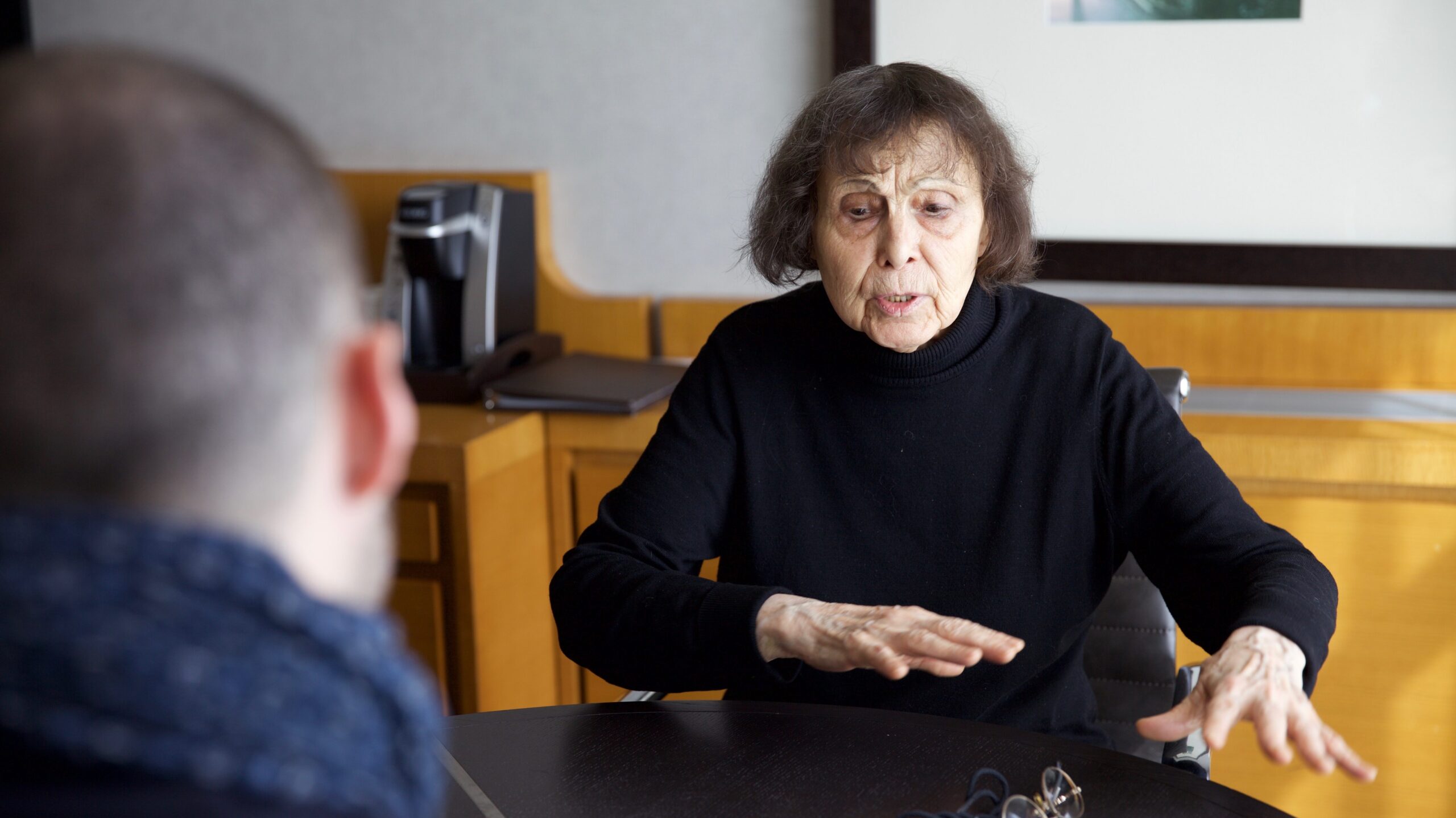
As a performer of contemporary music, I rarely see musical works as fixed or closed entities. Rather, I understand them as the result of an ongoing dialogue. This dialogue can take place through direct collaboration with composers, but also through a personal process of engaging with and understanding their musical language in a broader sense. In this kind of relationship, the performer rarely remains on the sidelines. He or she actively participates in shaping the work—sometimes subtly, through interpretation, and at other times more directly, through decisions and suggestions that emerge during the creative process itself. These experiences have led me to question common assumptions about authorship, the role of the performer’s contribution, and the authority of the score, which is often seen as something fixed and unchanging.
However, in working with contemporary composers, I have often encountered a different reality: composers who are open to dialogue, adjustment, and even to revising the written text in response to my suggestions. This openness raises further questions. How is the authority of a work—and of its creator—actually formed and reconsidered in practice? And to what extent does dialogue continue to shape a work even after it has been written down? These questions form the basis of this research.
My doctoral dissertation completed at the University of Toronto, The Composer-Performer Interrelationship in the Bayan and Accordion Compositions of Sofia Gubaidulina (2017), examines how Sofia Gubaidulina—one of the most significant contemporary composers—has collaborated extensively with eminent bayan and accordion performers, including Friedrich Lips (Russia), Elsbeth Moser (Germany), Geir Draugsvoll (Denmark), and Iñaki Alberdi (Spain).
In this research, I examine the creative processes behind some of Sofia Gubaidulina’s most significant works for accordion—De Profundis (1978), Silenzio (1991), Fachwerk (2009), and Cadenza (2010). These compositions were developed, and in some cases substantially revised, through close dialogue with performers. Drawing on interviews conducted both with the composer herself and with the performers she collaborated with, as well as on the analysis of scores and recorded performances, I explore how these collaborations function as processes of shared creation, in which the composer’s voice is shaped through ongoing interaction with performers. In this sense, these works are not only written, but also formed through an exchange that took place during rehearsals and performances.
I also consider how the processes of rehearsal and performance of In Croce (1979), in its version for cello and accordion, influenced both the composer and the work’s final form over time. This includes a comparative analysis of recorded interpretations in relation to the development of the score, as well as documented exchanges between performers and the composer. Particular attention is given to the role of the bayan and the accordion as instruments whose technical and structural specificities often require a collaborative, exploratory approach between composer and performer—one that differs fundamentally from the practices typical of more standardized keyboard instruments.
As a theoretical framework, I draw on Howard Becker’s Art Worlds (1982), which understands artworks as the result of fundamentally collaborative processes between artists and their contributors. This perspective allows me to reconsider questions of authorship, authority, fidelity to the score, and the role of the performer in contemporary music practice.

As a performer, I have approached Sofia Gubaidulina’s music from within, performing her works De Profundis and Et Expecto for solo accordion, as well as chamber pieces such as In Croce and Silenzio. For me, Gubaidulina has not been merely an object of study, but a composer through whose work I first entered the world of contemporary music. Her music holds a particular place in my experience: it opens space for interpretative freedom while remaining precisely defined by the score. It is precisely this tension—between openness and constraint—that, I believe, lies at the heart of the expressive power of Gubaidulina’s music and leads toward the broader questions addressed in this dissertation.
The full dissertation is available through the University of Toronto’s institutional repository – TSpace
Sofia Gubaidulina – In Croce (1979/1991)
Performed by Maria Kliegel (cello) and Elsbeth Moser (bayan)